
What Is Healthcare SEO In Kerala? A Complete Beginner’s Guide
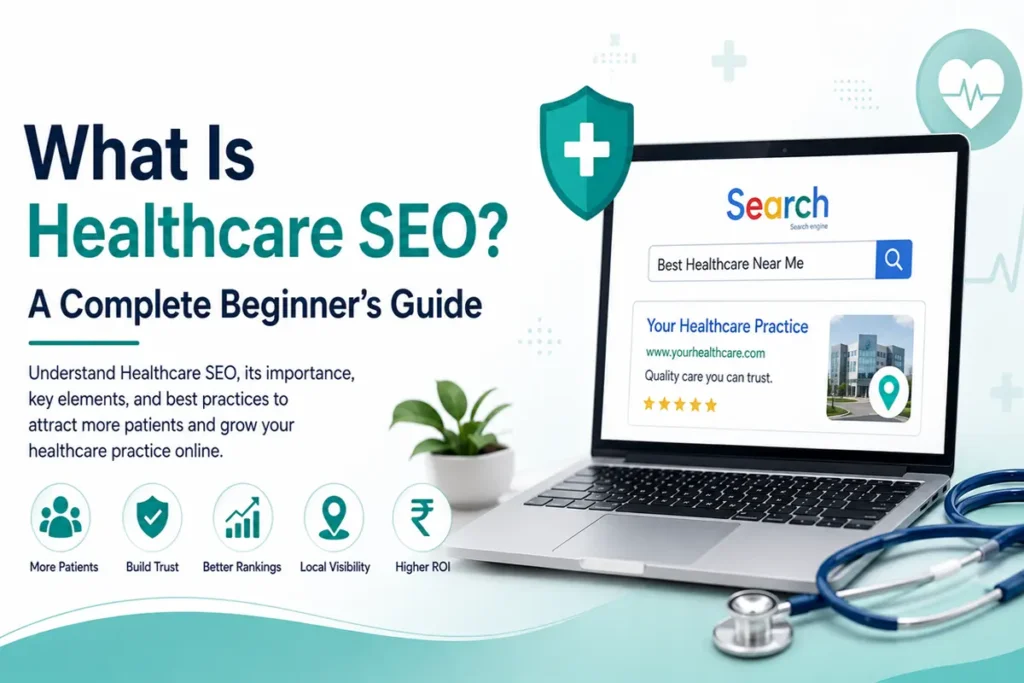
Healthcare SEO is the process of optimizing healthcare websites, hospitals, clinics, and medical practices to improve their visibility in search engine results and attract more patients. It combines technical SEO, local SEO, content optimization, entity-based SEO, schema markup, and E-E-A-T principles to help search engines understand and rank healthcare content. Healthcare SEO focuses on delivering accurate, trustworthy, and patient-focused information that matches user search intent.
Why Healthcare SEO Matters in 2026
If you think people still rely only on word-of-mouth to find doctors, think again. Today, healthcare decisions begin with a Google search.
In fact, recent data show that 77% of patients use search engines before booking an appointment, making SEO a critical growth channel for healthcare providers. That’s not a small number; it’s practically everyone.
Now imagine you run a clinic that offers excellent services, but your website doesn’t appear on the first page of search results. What happens? You lose patients—not because your service is bad, but because you’re invisible online. That’s the real power of healthcare SEO. It’s not just about rankings; it’s about being present when someone needs care the most.
Healthcare SEO has also become more important due to AI-driven search. Today, search engines don’t just list websites—they provide direct answers, summaries, and recommendations. This means your content must be clear, trustworthy, and structured properly to be featured. If not, you risk being left behind in a highly competitive digital space.
How Patients Search for Healthcare Today
Today’s patients are informed, cautious, and selective. They compare doctors online, read reviews, and explore multiple websites before making a decision. Nearly 96% of patients believe that online reviews are important, and most prefer doctors with high ratings. This means that your online presence directly impacts your credibility.
Healthcare SEO helps you match this behavior. It ensures that your website appears for relevant searches, provides valuable information, and builds trust before the patient even sets foot in your clinic. Simply put, it bridges the gap between your services and the patient’s needs.
What Is Healthcare SEO In kerala? The Core Concept.
Healthcare SEO, also known as medical SEO, is the process of optimizing healthcare websites so they rank higher in search engine results when patients search for medical information, services, or providers. It involves improving website content, technical performance, and online authority to attract relevant patient traffic.
Healthcare SEO is not just about keywords. It includes:
- Creating accurate and helpful medical content
- Ensuring fast and secure website performance
- Optimizing for local searches
- Building trust through expertise and credibility
Difference Between Healthcare SEO and Regular SEO
Healthcare SEO is not the same as regular SEO. Why? Because it deals with people’s health—something that directly impacts their lives. Google categorizes healthcare content under YMYL (Your Money or Your Life), meaning it applies stricter quality standards.
In regular SEO, you might get away with basic content and backlinks. But in healthcare SEO, you need:
- Verified medical information
- Author credentials
- Evidence-based content
- Strong trust signals
Search engines evaluate healthcare websites more carefully because misinformation can have serious consequences. That’s why healthcare SEO requires a deeper focus on accuracy, authority, and trustworthiness
How Healthcare SEO Works
At its core, SEO is about understanding what people are searching for. In healthcare, this becomes even more important because searches are often driven by urgency, fear, or curiosity. Patients don’t just type random keywords—they ask questions, describe symptoms, and look for solutions.
Key Components of Healthcare SEO in Kerala
On-Page SEO for Medical Websites
On-page SEO focuses on optimizing the content and structure of your website. This includes using relevant keywords, writing clear headings, and providing valuable information. In healthcare, this also means ensuring your content is medically accurate and easy to understand.
Technical SEO ensures your website performs well behind the scenes. This includes:
- Fast loading speed
- Mobile optimization
- Secure HTTPS connection
- Proper indexing
A slow or poorly designed website can drive patients away. Remember, 53% of users leave a page that takes more than 3 seconds to load. That’s a huge loss.
Local SEO for Clinics and Hospitals
Most patients search for nearby services. That’s why local SEO is crucial. It helps your clinic appear in local search results, Google Maps, and “near me” searches.
This involves:
- Optimizing Google Business Profile
- Managing reviews
- Using location-based keywords
- Content Strategy in Healthcare SEO
Content is the backbone of healthcare SEO. High-quality content not only improves rankings but also builds trust. Studies show that long-form content performs better and attracts more engagement.
Your content should answer real patient questions, provide solutions, and guide them toward your services.
Understanding E-E-A-T and YMYL
E-E-A-T stands for Experience, Expertise, Authoritativeness, and Trustworthiness. It’s a framework used by search engines to evaluate content quality, especially in healthcare.
To succeed, your website must demonstrate:
- Real medical expertise
- Author credentials
- Reliable sources
- Transparent information
Why YMYL Matters in Healthcare
YMYL content affects a person’s health, finances, or safety. Healthcare falls directly into this category. That’s why Google applies stricter standards to ensure only reliable information is shown.
Benefits of Healthcare SEO in Kerala
Trust and Credibility Building
When your website ranks high and provides valuable information, patients perceive you as trustworthy. This builds long-term relationships and loyalty.
Healthcare SEO Strategies for Beginners
Keyword Research for Healthcare
Start by identifying what patients are searching for. Focus on:
Symptoms
Treatments
Local services
Creating High-Quality Medical Content
Write content that is:
- Accurate
- Easy to understand
- Helpful
- Optimizing for Local Searches
Use location-based keywords and optimize your Google Business Profile to attract local patients.
Challenges in Healthcare SEO
Compliance and Regulations
Healthcare SEO must follow strict regulations. This includes patient privacy and accurate information.
High Competition in the Healthcare Industry
You’re competing with major institutions and trusted websites. Building authority takes time and effort.
Future of Healthcare SEO
The future of healthcare SEO lies in AI and voice search. Patients are increasingly using voice assistants and AI tools to find information. Optimizing for these platforms will be essential.
Conclusion
Conclusion
In a world increasingly focused on the digital realm, healthcare SEO is no longer optional – it’s a critical growth engine for doctors, clinics, and hospitals. Patients today rely on search engines to make informed healthcare decisions, and if your website isn’t optimized, you’re invisible to a large portion of your potential audience. From understanding patient intent to implementing strategies like content optimization, local SEO, and technology enhancements, each element plays a role in building a strong online presence that attracts and converts patients.
What makes healthcare SEO unique is the strong focus on trust, accuracy, and credibility. Unlike other industries, you’re not just selling a product – you’re managing people’s health and well-being. That’s why frameworks like E-E-A-T and strict YMYL guidelines exist to ensure that only credible, expert content ranks high. If you consistently provide valuable, accurate, and easy-to-understand medical information, search engines will reward your efforts with better visibility and authority over time.
For businesses in regions like Kerala, the opportunity is even greater. With internet usage increasing and competition among healthcare providers increasing, investing in SEO can give you a huge advantage. Whether you are a small clinic or a multi-specialty hospital, working with an experienced SEO expert in Kerala can help you identify the right keywords, optimize your website, and build a strategy that is tailored to your local audience.

Sarith Udhaya is a Google, Hubspot, SEMrush, and Bing-certified Freelance SEO Expert based in Calicut, Kerala. He has mastered creating successful SEO marketing strategies for all types of businesses using his 6+ years of experience in digital marketing.
From SEO and Google Ads to YouTube optimization and complete digital marketing, Sarith Udhaya works closely with clients to understand their goals and achieve sustainable growth.
His broad industry knowledge, receptiveness, and relentless commitment to outcomes have earned him clients’ trust throughout Kerala. He has helped countless businesses find their digital voice, ensuring they rank well, attract the right customers, and grow steadily. Sarith Udhaya approach is simple – understand your story, translate it into a digital strategy, and ensure the world finds you online.